
Nobody wants to find a centipede sprinting across the bathroom floor at midnight. That fast, many legged thing sends most people straight to Google, and one question keeps coming up, do dehumidifiers help with house centipedes, or is that just another internet myth.
Well, humidity does play a real role in why these things show up in the first place, and cutting it back genuinely makes your house less appealing to them, though.
Setting up a dehumidifier in your basement won’t kill house centipedes. It can make the area less comfortable for them by cutting off the moisture source they heavily rely on.
Keep scrolling to figure out what house centipedes are, why they like damp spaces, what a dehumidifier can and can’t do, and most importantly, what else actually works alongside it.
Table of Contents
What Are House Centipedes?
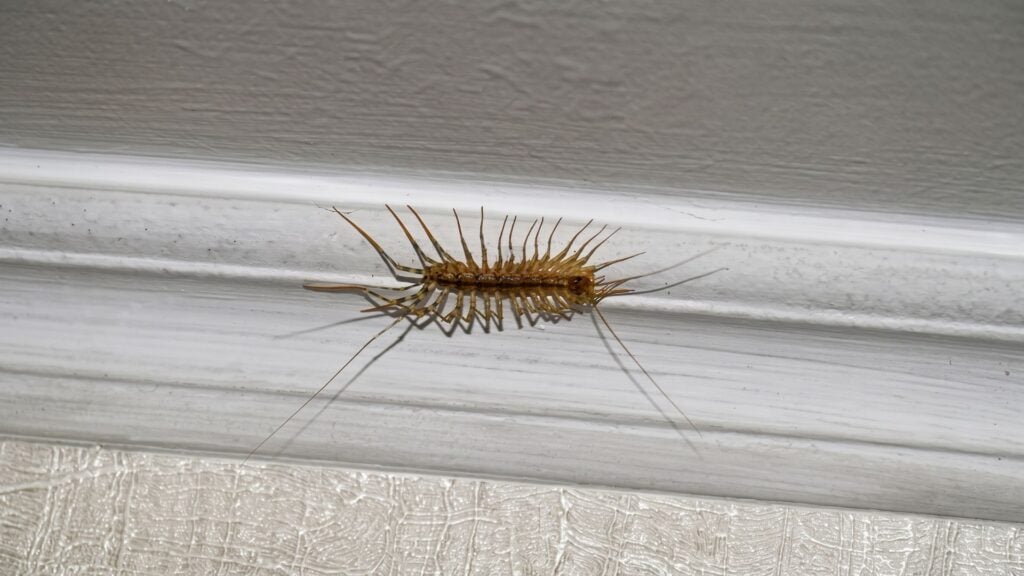
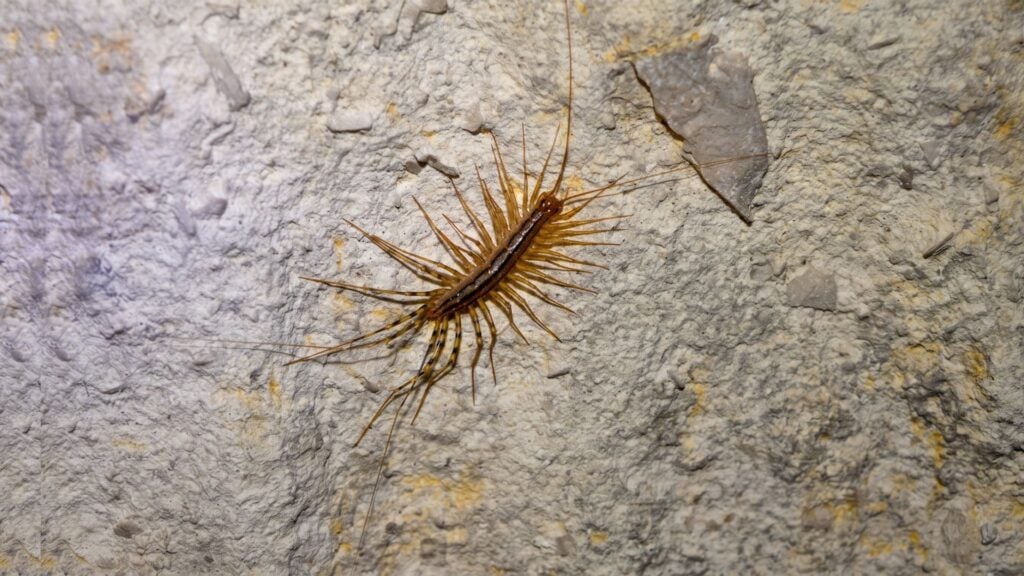
House centipedes measure about 1 to 1 and a half inches long. They are grayish yellow with three dark stripes running the length of their back. Count the segments and you’ll find fifteen, each one carrying a pair of long legs banded with white. That is exactly why they look like they’re moving in fast forward.
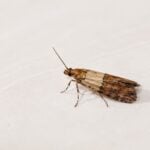
They’re solitary by nature and therefore genuine infestations are pretty rare to find and they constantly search for prey. That’s actually their redeeming quality. They kill and eat other unwelcome pest insects, silverfish, moths, spiders, roaches, flies, even termites.
Why Do House Centipedes Like Damp Homes?
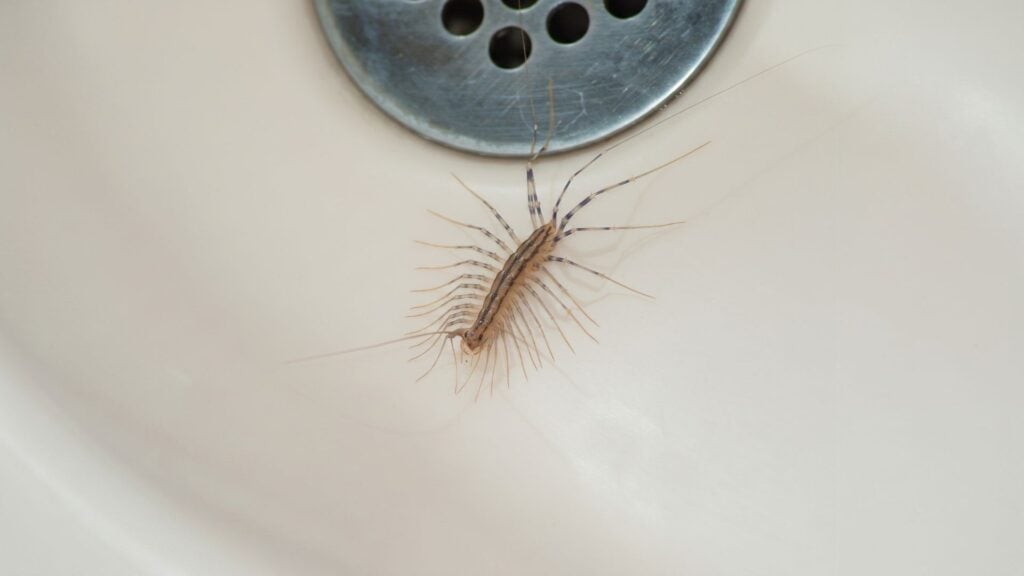
Moist, high humidity environments are exactly what draws centipedes indoors in the first place. Do house centipedes like humidity? Genuinely, yes, since their bodies lose water fast and they need consistently damp air to survive without drying out.
Basements, bathrooms, crawl spaces, anywhere moisture pools up or lingers, all become prime real estate. House centipedes and moisture go hand in hand for another reason too. Damp environments also support the silverfish, roaches, and other small insects centipedes actually hunt.
Finding centipedes in your home can sometimes be a sign that a bigger pest problem is hiding nearby, especially if their food sources are plentiful.
Humid summers and rainy winters both tend to bring more centipede activity, since excess moisture is one of the biggest contributors to bug outbreaks generally, not just house centipedes specifically.
How Does a Dehumidifier Help With House Centipedes?
A dehumidifier works by pulling excess moisture straight out of the air, and moisture cutback is really the whole strategy here. It cuts off the favorable conditions house centipedes and their prey both depend on.
You could run one consistently in either the basement, bathroom, or crawl space where you find them often and the dehumidifier will do its job in drying out the area that will be less appealing to centipedes afterward.
This won’t chase out every centipede overnight, cuz a dehumidifier for house centipedes works as a long game strategy. Less humidity means fewer silverfish and roaches for them to hunt, which eventually means fewer centipedes sticking around at all. It also helps ward off mold growth inside your home.
Moisture in general creates a genuinely conducive environment for a whole range of problems beyond just bugs. And if you’re able to cut that moisture source out of your house, you’ll likely see fewer moisture-loving insects for the most part.
Will a Dehumidifier Kill House Centipedes?

Get practical help identifying pests, preventing infestations, and protecting your home throughout the year.
View the Pest Control eBookAs stated earlier, a dehumidifier will help make your home less suitable for house centipedes, but it won’t directly kill them. Its main job is to bring down the humidity that helps centipedes survive and supports the other insects they feed on. Turns out, you do need to pair it with actual prevention steps, and that’s when real results show up.
Where Should You Put a Dehumidifier for House Centipedes?
- Basements top the list of damp areas, hands down, since they’re usually the dampest, least ventilated space in a house and a classic entry point. House centipedes in basement sightings are extremely common for exactly this reason.
- Bathrooms come in second, especially ones without a working exhaust fan, since steam from showers keeps humidity elevated for hours after someone’s done, a classic setup for bathroom pests generally, not just centipedes. House centipedes in bathroom encounters tend to happen most right after a hot shower, when the room’s still holding onto moisture.
- Crawl spaces deserve a dehumidifier for house centipedes too, even though they’re easy to forget about. They often sit at higher humidity than the rest of the house without anyone noticing.
Pro Tip: If house centipedes in my house keeps coming up as a search on your own phone at midnight, start with whichever room feels noticeably more humid than the rest, that’s almost always where the real problem lives.
What Humidity Level Do House Centipedes Prefer?
The EPA recommends keeping indoor relative humidity below 60 percent, ideally somewhere between 30 and 50 percent, mainly to control mold, but that same range also discourages centipedes, roaches, and other pests that depend on damp air.
Staying consistently within that window is really the goal for a Dehumidifier keep house Centipedes away strategy that actually works long term. A cheap hygrometer from a hardware store makes it easy to test moisture levels in a basement or bathroom without guessing, and knowing your actual numbers beats assuming a room feels fine just because it looks dry.

5 Ways to Keep House Centipedes Away
Beyond running a dehumidifier, a few other habits genuinely help keep house centipedes away for good, and together they cover how to stop house centipedes indoors more completely than any single fix.
Use Centipede Repellents
A few different approaches to house centipede control work here, and combining more than one usually gets better results than relying on just one method.

Sticky traps, the same flat glue boards used for spiders and other crawling insects, work well for monitoring activity and catching centipedes that wander through at night. Place a few along baseboards in a basement or bathroom, and check them weekly to see whether activity is actually dropping or not.

Natural repellent sprays built around essential oils, peppermint and cedar oil especially, genuinely scares away house centipedes without relying on harsh chemicals. Centipedes navigate largely by scent and strong, unfamiliar smells disrupt that.
Diatomaceous earth offers another option, a fine powder that works mechanically rather than chemically, damaging a centipede’s exoskeleton on contact and causing it to dry out over a day or two.

Apply it along baseboards, around drains, and near any cracks where centipedes might enter. None of these methods work instantly, and none replace fixing the actual humidity problem, they work best as a supporting layer. Combined with lower humidity, these methods genuinely help get rid of house centipedes.
Fix Leaks
Repair water leaks the moment you spot them, under sinks, around toilets, along basement walls. A slow leak left alone for weeks creates exactly the damp microenvironment centipedes and their prey both thrive in, even if the rest of the house stays reasonably dry. Fixing leaks is really the simplest way to reduce humidity for house centipedes without buying any new equipment at all.
Seal Cracks and Gaps
Centipedes squeeze through surprisingly small gaps around foundation cracks, door thresholds, and window frames. Caulking these entry points cuts off easy access from outside, which matters most during humid summers and rainy winters when centipede activity naturally picks up.
Clear Out Clutter
Piles of cardboard, stacked boxes, and cluttered basement corners all create the kind of undisturbed, humid microclimate centipedes prefer. Clearing clutter regularly removes hiding spots and makes it a lot harder for a small population to go unnoticed for months.
Another Good Read: Millipede Vs Centipede – What’s The Difference
Control Other Pests
Since centipedes hunt other bugs, controlling silverfish, roaches, and other basement pests indirectly cut back their food source. This ties directly back to house centipede prevention as a whole, less prey around a home generally means fewer centipedes sticking around to hunt it.
Frequently Asked Questions (FAQs)
Why do I keep finding centipedes in my basement?
Basements typically run more humid than the rest of a house, especially without proper ventilation or a functioning dehumidifier. It makes them a natural gathering spot for both centipedes and the smaller insects they hunt.
Does lowering humidity kill centipedes?
Not directly, but it does make survival harder over time, especially for eggs and juveniles that need consistent moisture to develop. Lower humidity mainly works by cutting off their food supply and making the environment less hospitable overall.
How do I prevent future centipede problems?
Combine consistent humidity control with sealed entry points, regular decluttering, and prompt leak repairs. No single fix works alone, but stacked together, they make a home genuinely unappealing to centipedes long term.
Wrapping Up…
A dehumidifier isn’t a magic fix for house centipedes, but it’s a genuinely solid first move. Lower humidity means fewer of the small insects centipedes hunt, a less hospitable environment overall, and real support for mold prevention on top of it. Pair that with sealed cracks, quick leak repairs, and a bit of decluttering, and most centipede problems fade out within a few weeks rather than sticking around indefinitely. It won’t happen overnight, and that’s fine, real pest prevention comes from consistency, not a single product. Keep humidity in check as your core Dehumidifier keep house Centipedes away strategy, and the rest gets noticeably easier. A dry home just isn’t worth a centipede’s time.